Which Modern Intranet Platform Fits Your Team Best in 2026?
Welcome to the Modern Workplace Maze
Every intranet vendor in 2026 tells the same story. Their platform integrates with everything, their engagement scores are industry-leading, and their AI assistant will transform how your organisation communicates. It sounds compelling, right up until the point where you are sitting in your fourth demo of the week, and every solution looks and sounds remarkably similar. Choosing the right intranet has become one of those decisions that feels deceptively straightforward on paper but turns genuinely complicated the moment real-world constraints enter the conversation.
The truth is, the question of what are the best modern intranet platforms? does not have a universal answer, and any article or analyst report that pretends otherwise is doing you a disservice. The platforms that consistently perform well do so not because they are objectively superior in every dimension, but because they happen to align with the specific needs, structures, and existing systems of the organisations using them. That distinction matters enormously when you are the one signing off on a multi-year contract.
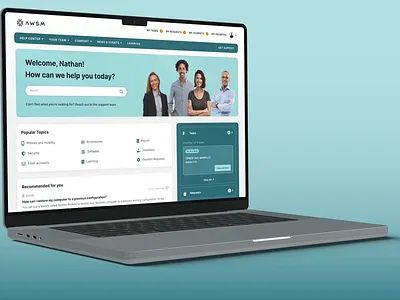
This article is designed to cut through the vendor noise and help decision-makers think clearly about what they actually need before they get swept up in polished sales presentations. Rather than ranking platforms by feature count, the focus here is on the practical questions that should be shaping your shortlist from the very beginning. Think of it less as a buyers’ guide and more as a planning conversation with someone who has seen what works and what gets quietly abandoned eighteen months after launch.
Start with Your Current Tech Ecosystem
Before you evaluate a single platform, it is worth having an honest conversation with your IT team about the infrastructure you are already running. Your existing technology stack is not just a consideration — it is the single biggest factor in determining which platforms belong on your shortlist. An intranet that fights against your current tools rather than extending them will create friction at every turn, no matter how elegant its interface may appear during a demo.
If your organisation is already heavily embedded in the Microsoft 365 ecosystem, platforms like Omnia are worth serious attention. Omnia is built specifically to sit on top of SharePoint and Teams, which means it does not try to replace what you already have — it enhances it. Your IT team will not be managing a standalone system with its own identity and permission structures; they will be working within a familiar environment. For organisations where SharePoint is already the backbone of document management, this kind of native integration dramatically reduces the implementation burden and ongoing maintenance overhead.
The picture looks quite different for organisations running on Google Workspace. Here, LumApps has carved out a strong reputation by offering deep Google integration that feels native rather than bolted on. Gmail, Drive, Meet, and Calendar surface naturally within the intranet experience, so employees do not have to context-switch constantly between tools. The platform speaks the same language as the rest of the Google stack, which smooths adoption considerably for teams that live inside the Google ecosystem day to day. According to Gartner’s digital workplace research, integration depth remains one of the top factors organisations cite when evaluating intranet platform satisfaction — and it is easy to understand why when you consider how much time is lost to fragmented workflows.
Before you fall in love with a vendor based on a compelling demo, take the time to work through a few basic prerequisites with your internal team. Here is a practical starting checklist to bring into those early conversations:
- Which productivity suite does the majority of your workforce use daily — Microsoft 365, Google Workspace, or something else?
- Do you have an existing SharePoint environment, and if so, how actively is it used?
- What identity management system are you running, and does your shortlisted platform support it natively?
- How is your IT team structured — do you have in-house SharePoint developers, or do you rely on external support?
- Are there legacy systems (HR platforms, payroll, project management tools) that need to surface content or data within the intranet?
Desk Workers Versus the Frontline Reality
It is one thing to choose an intranet that works beautifully for a team of marketing managers sitting at dual monitors in a city office. It is quite another to design a communication solution for a workforce of hospital porters, logistics drivers, or retail staff who may never sit at a computer during their shift. The daily reality of these two types of workers is so different that building a single platform to serve both groups equally well is genuinely difficult, and many organisations get this wrong by defaulting to the experience of their office-based employees.

Platforms like Staffbase and Unily have built their reputations on serving the frontline workforce well. Both invest heavily in mobile-first design, push notification capabilities, and streamlined login flows that do not require employees to remember complex credentials. For a nurse checking shift updates between rounds or a warehouse operative glancing at a safety briefing before a shift starts, the ability to surface the right information in under ten seconds is not a nice-to-have — it is the entire value proposition. Features like deep document version control or intranet-native wikis are largely irrelevant to this audience. What matters is speed, clarity, and accessibility from any device.
Contrast that with the needs of a knowledge-intensive professional services firm where consultants spend their days creating, refining, and sharing complex documents and project materials. These teams benefit most from platforms that prioritise robust knowledge management, strong search functionality, and rich content authoring tools. The intranet in this context is less a communications channel and more an organisational memory — a place where expertise is captured, discoverable, and consistently maintained. Forcing this kind of team to use a mobile-first platform optimised for frontline simplicity would be as counterproductive as the reverse.
The table below offers a simplified comparison to help clarify which platform characteristics tend to serve each workforce type best:
| Workforce Type | Priority Features | Platforms Worth Considering |
|---|---|---|
| Frontline / Deskless | Mobile-first UX, push notifications, simple login, targeted messaging | Staffbase, Unily |
| Office-Based / Knowledge Workers | Document management, search, content authoring, integrations | Omnia, Viva Connections |
| Mixed Workforce | Flexible multi-channel delivery, audience segmentation, modular design | LumApps, Simpplr |
Aligning Platform Capabilities with Budget and Scale
Enterprise intranet platforms are not shy about their pricing, and for good reason — the top-tier options come with impressive capability sets, dedicated implementation support, and the kind of customisation that larger organisations often require. But paying for enterprise complexity when your organisation has 400 employees and a relatively simple communication structure is a bit like booking a grand hotel ballroom for an intimate dinner party. The room is technically excellent, but the scale is all wrong, and you will spend the evening feeling lost in the space rather than making the most of the occasion. Just as matching the option to your team’s needs is the golden rule when planning any kind of gathering, the same principle applies with unforgiving clarity to intranet procurement.
Mid-market challengers like Simpplr or Happeo have deliberately built their products for organisations that want a polished, well-supported experience without the implementation overhead and licensing costs of enterprise platforms. These solutions tend to offer faster time-to-value, more intuitive out-of-the-box configuration, and pricing structures that reflect the realities of a 200 to 1,500 employee organisation. For a growing business that needs a credible intranet now rather than in eighteen months after a lengthy implementation, these options are often the more pragmatic choice. Forrester’s employee experience research consistently highlights that adoption rates suffer when platforms are over-engineered for the actual user base — a finding that should give any procurement team pause before reaching for the most feature-rich option.
Total cost of ownership is a figure that rarely appears prominently in vendor proposals, but it should be central to your evaluation. Licensing fees are just the beginning. Factor in the internal resource required to manage content, the ongoing need for platform governance, potential costs for additional integrations, and the hidden expense of retraining staff when the platform is updated or reconfigured. A thoughtful practical shortlist-and-compare approach — one that maps each platform’s true operational cost against your team’s actual capacity to manage it — will often reshape your decision significantly.
- Calculate annual licensing costs across your full projected headcount, not just current employees
- Identify who internally will own platform governance and estimate their time commitment realistically
- Ask vendors directly about the cost of additional integrations beyond what is included in the standard package
- Request reference customers of similar size and structure to understand real-world maintenance demands
- Factor in content migration costs if you are moving from an existing system rather than starting from scratch
What to Expect During Rollout and Beyond
There is a persistent gap between the timeline vendors describe during the sales process and the timeline organisations actually experience during deployment. Understanding this gap honestly — and planning for it — is one of the most valuable things you can do before signing a contract. The reality is that a successful company-wide intranet launch involves far more than technical configuration. It requires stakeholder alignment, content strategy, governance planning, and change management work that no platform can automate away.
Simpplr stands out in the current market for its emphasis on turnkey AI-driven setup. Its intelligent intranet approach is designed to reduce the configuration burden significantly, using machine learning to surface relevant content, suggest organisational structures, and guide administrators through setup decisions. For organisations without a dedicated intranet team or deep technical resource, this kind of guided implementation can meaningfully compress the timeline between purchase and productive use. In contrast, platforms like Omnia or LumApps offer considerably more customisation depth but require more deliberate upfront configuration work — a trade-off that is entirely worth it for organisations with clear, complex requirements and the internal resource to support it.
A realistic deployment roadmap typically moves through several distinct phases, and understanding each one helps you set credible expectations internally:
- Discovery and requirements mapping — typically two to four weeks spent auditing current communication channels, identifying key user groups, and documenting integration requirements before any platform configuration begins.
- Platform configuration and content migration — depending on complexity, this phase runs anywhere from four to twelve weeks, covering technical setup, initial content population, and integration testing.
- Pilot launch with a controlled user group — a critical step that is frequently skipped in the rush to go live, this phase involves releasing the platform to a representative subset of employees for feedback before the full rollout.
- Company-wide launch and communications campaign — the moment the platform becomes available to all staff, supported by a structured internal communications push that explains what the intranet is for and why employees should use it.
- Post-launch governance review — scheduled at three and six months post-launch, this review identifies content that is already becoming stale, assesses adoption metrics, and establishes the ongoing ownership model for platform health.
That final governance phase deserves particular emphasis. The most common reason intranet platforms fail is not poor technology — it is the absence of a plan for keeping content current and relevant once the launch excitement fades. Without a clear ownership model for different content areas, pages quietly go out of date, search results become unreliable, and employees stop trusting the platform as an authoritative source. Building governance responsibilities into job roles and department planning from day one is the difference between an intranet that compounds in value over time and one that quietly becomes a digital equivalent of a dusty filing cabinet. Knowing how to choose the right fit is only the first step — sustaining that fit over time requires ongoing attention.
Take These Steps Before You Book Your First Demo
The core message running through every section of this article is consistent: platform fit outweighs raw feature counts, every time. The organisations that make the best intranet decisions are not the ones that ran the most demos or built the longest evaluation scorecards — they are the ones that were honest with themselves about their workforce, their infrastructure, and their internal capacity to manage a platform long-term before they ever entered a sales conversation. A platform that is 80% of the capability of a market leader but perfectly matched to your team’s context will outperform the industry benchmark every time it comes to adoption, satisfaction, and genuine business value.
Before reaching out to a single vendor, take the time to answer three questions honestly within your own organisation:
- What tech stack are we already committed to, and which platforms extend rather than replace it? This question alone will eliminate a significant portion of the market from consideration.
- Who are our employees, really — and how do they currently prefer to receive information? Survey actual staff about their communication pain points before assuming you know the answer from the top down.
- Who will own this platform twelve months after launch, and do they have the time and skills to manage it well? If the honest answer is unclear, governance planning should happen before procurement, not after.
Grounding your decision in what employees genuinely experience day to day — rather than what leadership assumes about their workflows — is one of the most underused tools in the intranet procurement process. A short internal survey asking staff where they currently struggle to find information, what communication channels they actually trust, and what would make their working day measurably easier will tell you more about the right platform choice than any vendor whitepaper. Start there, and the decision becomes considerably clearer.
About Author

admin
-
 Venue Budget
Venues are required for a plethora of events, and one of the
-
 Venue Event Organisers And Augmentation
Within the professional world it is common for groups of people to